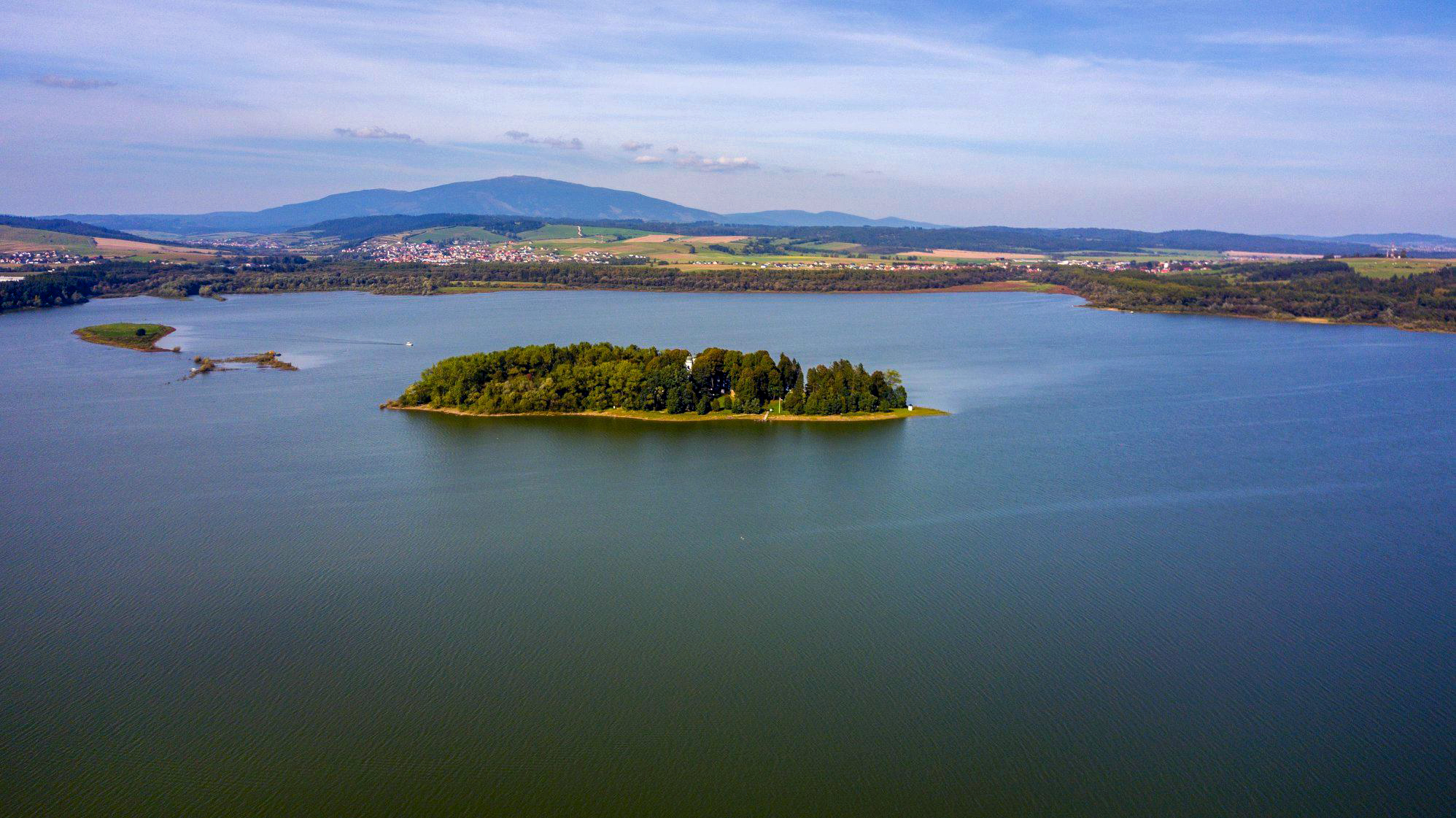
The former village of Slanica was mentioned in written sources as early as the 16th century. Over time, it became an important and relatively prosperous cloth-making village, from which several personalities of Slovak cultural and social life came. We will mention Anton Bernolák, whose statue is located on the island. In 1953, the Orava Dam was completed. Plans for its construction date back to the 19th century, and implementation began only during World War II. The dam flooded a large part of the Upper Orava Basin along with the villages of Ústie, Slanica, Oravské Hámre, Osada and Ľavkovo, which was the settlement of Dolný Štefanov. Above Slanica, on a natural terrain elevation, there was the Church of the Exaltation of the Holy Cross, along with a cemetery, a calvary and the tomb of the Klinovský family. After the water level rose, these parts of the village became part of the newly formed island. The island later came under the management of the Orava Gallery in Dolný Kubín and was given its current name, the Slanice Island of Art.